Diwali crackers: how can I keep my child safe?
Let adults light the crackers in an open space while children watch from a distance, keep water or sand ready, and dress children in close-fitting cotton clothes. If a burn happens, cool it under running water and see a doctor.
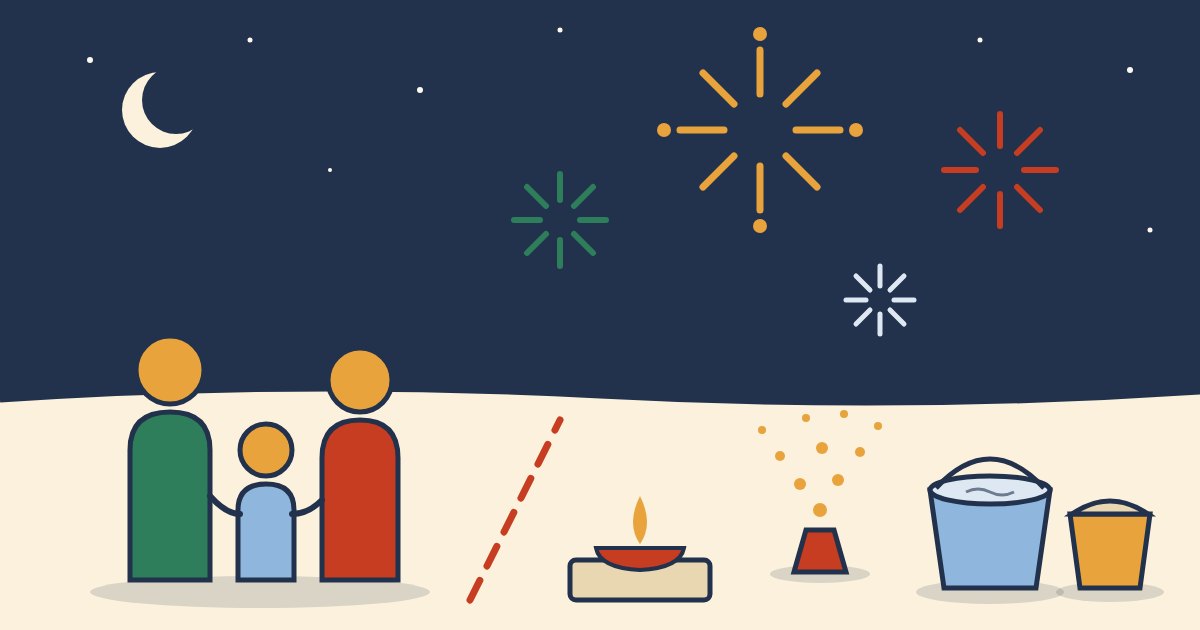
Diwali is a time of lights, sweets and family. For many children, crackers are the most exciting part. But every year, doctors in India see children with burns to the hands, face and eyes from crackers. Most of these injuries can be prevented with a little planning.
This article brings together the safety advice in the Health Ministry's guidelines on firecrackers and international guidance on burns, so your family can enjoy the festival safely.
Adults light, children watch
Children move quickly, get excited and do not yet judge distance and danger well. The Health Ministry advises that adults should light crackers, or closely supervise children. Young children should watch from a safe distance, held by an adult or standing behind a line you draw on the ground.
Sparklers (phuljhadi) look gentle, but they burn extremely hot. The American Academy of Pediatrics advises that sparklers are not safe for young children, because they can set clothes on fire and burn the skin and eyes.
Choose a safe place and get ready
- Light crackers in a wide, open space, away from homes, parked vehicles, dry leaves and anything that can catch fire. Avoid narrow lanes.
- Keep a bucket of water or sand close by before you start.
- Never light crackers indoors, in a crowd, or inside a tin, pot or bottle.
- Buy crackers from licensed shops. Do not use old or unbranded ones, and never make crackers at home. Homemade "carbide guns" are illegal and dangerous.
What you can do
- Dress for safety. Put children in close-fitting cotton clothes and closed footwear. Avoid loose, flowing or synthetic clothes, and tie dupattas and long hair back.
- Light one at a time. Use a long stick or agarbatti, stand at arm's length, and never bend over a cracker.
- Leave duds alone. Never pick up or relight a cracker that did not go off. Wait, then soak it in water.
- Soak used crackers in water or sand before you throw them away.
- Never carry crackers in pockets, and never throw them at people or animals.
- Protect eyes and ears. Wear protective glasses when lighting crackers, and keep children far away from loud ones.
- Wash hands after handling crackers.
If a burn or eye injury happens
Stay calm and act quickly. If clothes catch fire, the child should stop, drop and roll, or you can smother the flames with a blanket. Then:
- Cool the burn under cool running tap water for 10 to 20 minutes. Do not use ice or ice-cold water.
- Remove rings, bangles and tight clothing near the burn before it swells. Do not pull off clothing that is stuck to the skin.
- Do not put toothpaste, oil, butter, ink or any home paste on a burn. Do not break blisters.
- Cover the burn loosely with a clean, dry cloth.
- For an eye injury, do not rub the eye. Gently wash it with plenty of clean, cool water for 15 to 20 minutes, holding the eyelids open, and see a doctor straight away.
When to see a doctor
Burns in children should be checked by a doctor. Go to the nearest hospital, or call 112 for emergency help, if the burn is larger than the child's palm, looks deep, or is on the face, eyes, hands, feet or joints, or if the child was hurt by smoke or is very drowsy or unwell.
References
- Trauma and Burn Division, Directorate General of Health Services, Ministry of Health and Family Welfare, Government of India. Guidelines for Safe Handling and Use of Firecrackers in India. New Delhi: DGHS, MoHFW; 2026. Link
- World Health Organization. Burns (fact sheet). Geneva: WHO; 2026. Link
- American Academy of Pediatrics, Council on Injury, Violence and Poison Prevention. Fireworks Safety Tips for Kids and Families. HealthyChildren.org; 2026. Link
This note is health education for the public. It does not replace a consultation with a doctor who can examine your child.
Prepared with AI assistance; medically reviewed by Dr Harshal Khade before publishing. Illustration created with AI assistance.