Umbilical cord stump: how do I care for it at home?
Keep your baby's cord stump clean and dry, and put nothing on it: no oil, powder, ash or home remedies. It usually dries and falls off on its own by about 3 weeks of age.
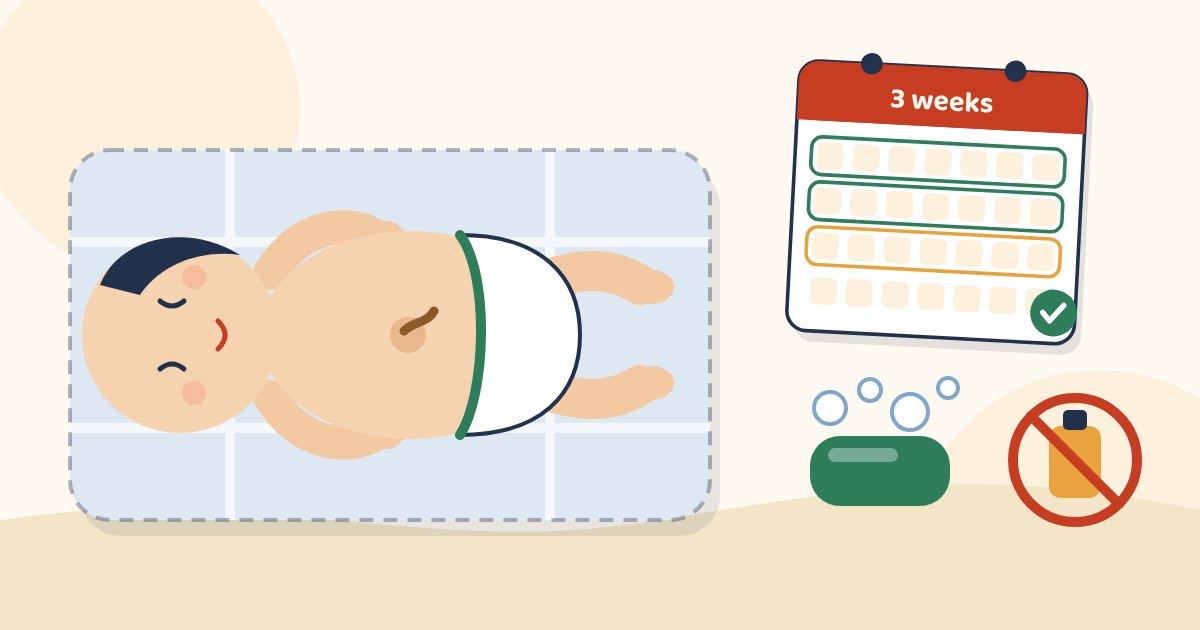
After birth, the umbilical cord is clamped and cut. A short piece, called the stump, stays on your baby's belly. Over the next few weeks it dries, shrinks and falls off by itself, leaving the belly button.
Many families have been told to put something on the cord. The current advice is simpler: keep it clean, keep it dry, and leave it alone. This note explains how.
Clean and dry is all it needs
The World Health Organization (WHO) advises parents to keep the umbilical cord dry and not to apply anything on it, such as ointment. India's Mother and Child Protection Card, given to families by the Government of India, also says: keep the cord dry.
The American Academy of Pediatrics (AAP) notes that there is no need to use alcohol (spirit) on the stump; just keep it clean and dry while it shrivels and falls off.
Why nothing should be put on the cord
In many homes, oil, ghee, turmeric, powder, ash or herbal pastes are put on the cord with good intentions. An AAP report on cord care explains that traditional materials such as ash and herbal pastes can carry harmful germs into the cord, and that dry cord care, without applying anything, is preferable in most situations.
If elders in the family suggest a home remedy, you can gently explain that doctors now advise keeping the cord clean and dry, with nothing put on it.
How long it takes to fall off
The stump slowly dries and shrivels. According to the AAP, it should dry and drop off by about 3 weeks of age. Let it fall off on its own; do not pull it, even if it is hanging by a thread.
When it falls off, a few drops of blood on the nappy are normal.
What you can do
- Wash your hands with soap and water before touching your baby, and especially before touching the cord. Here is how to teach good handwashing at home.
- Keep the stump clean and dry. If it gets dirty, ask your baby's doctor or nurse how to clean it.
- Do not put anything on the cord: no oil, ghee, turmeric, powder, ash, cream or any other home remedy.
- Fold the nappy below the stump, so that urine does not soak it.
- Ask your baby's doctor or nurse how to bathe your baby while the stump is still attached.
- Never pull or cut the stump. Let it fall off by itself.
When to talk to a doctor
The AAP advises parents to show their baby to a doctor if:
- the cord is actively bleeding (more than a few drops);
- there is yellowish, foul-smelling discharge from the cord;
- the skin around the base of the cord is red;
- your baby cries when the cord or the skin around it is touched;
- the stump has not fallen off by about 3 weeks of age.
Your baby's cord is also checked during the routine newborn visits by your doctor, nurse or ASHA worker, so these visits are a good time to ask any questions.
References
- World Health Organization. Caring for a newborn. Your life, your health. Geneva: WHO; 2022. Link
- Ministry of Health and Family Welfare and Ministry of Women and Child Development, Government of India. Mother and Child Protection Card (English version). Link
- Stewart D, Benitz W; American Academy of Pediatrics Committee on Fetus and Newborn. Umbilical cord care in the newborn infant. Pediatrics. 2016;138(3):e20162149. Link
- American Academy of Pediatrics. Umbilical cord care in newborns. HealthyChildren.org; updated 2025. Link
This note is health education for the public. It does not replace a consultation with a doctor who can examine your child.
Prepared with AI assistance; medically reviewed by Dr Harshal Khade before publishing. Illustration created with AI assistance.